
Water-based adhesives represent the largest segment of industrial adhesive production, accounting for roughly 60% of all manufactured adhesives. These systems use water as the primary carrier medium, making them environmentally friendly and cost-effective. The most common types include polyvinyl acetate (PVA), acrylic emulsions, and polyurethane dispersions.
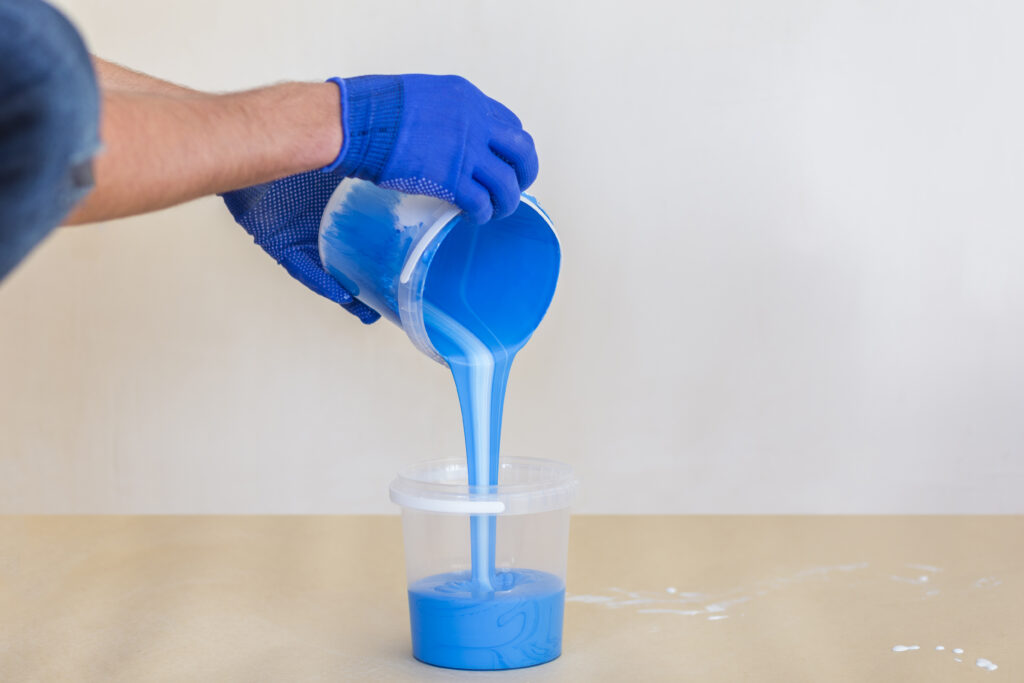
Manufacturing these adhesives involves emulsion polymerization processes where monomers are dispersed in water with stabilizers and initiators. The result is a stable colloidal suspension that maintains excellent bonding properties while remaining safe to handle. PVA-based systems work particularly well for porous substrates like paper and wood, while acrylic emulsions offer superior clarity and aging resistance for packaging applications.
Production facilities typically maintain strict temperature control during manufacturing, as heat can destabilize emulsions and create coagulation. Quality control teams monitor viscosity, pH levels, and solid content throughout the process to ensure consistent performance characteristics.
Solvent-Based Formulations
Solvent-based adhesives deliver exceptional bonding strength and rapid setting times, making them essential for demanding industrial applications. These formulations use organic solvents like toluene, acetone, or methyl ethyl ketone to dissolve polymer resins and create highly penetrating bonding agents.
The manufacturing process begins with dissolving synthetic rubber, acrylic, or polyurethane resins in carefully selected solvent blends. Factories must maintain precise ratios to achieve optimal viscosity and application properties. Contact adhesives, commonly used in automotive and construction industries, represent a major product category within this segment.
Safety considerations drive significant investment in specialized equipment. Production areas require explosion-proof electrical systems, comprehensive ventilation networks, and automated solvent recovery systems. Many facilities operate closed-loop processes that capture and recycle up to 95% of solvents, reducing both environmental impact and raw material costs.
Hot Melt Adhesive Products
Hot melt adhesives arrive as solid blocks or pellets that transform into liquid when heated, typically between 300-400°F. These 100% solid systems contain no water or solvents, making them ideal for high-speed production lines where instant bonding is critical.
Manufacturing involves precision blending of thermoplastic polymers, tackifying resins, waxes, and antioxidants in heated mixers. Ethylene vinyl acetate (EVA), polyamide, and polyolefin-based formulations dominate production volumes. The mixing process requires careful temperature management to prevent polymer degradation while achieving homogeneous distribution of all components.
Quality control focuses on melt viscosity, open time, and thermal stability testing. Advanced facilities use continuous monitoring systems that track temperature profiles and automatically adjust heating zones to maintain consistent product quality. Many manufacturers offer custom color matching and specialized formulations for specific application requirements.
Structural and Specialty Adhesives
Structural adhesives create permanent bonds capable of withstanding extreme mechanical stress, temperature variations, and chemical exposure. These high-performance products include epoxies, structural acrylics, and polyurethane systems designed for aerospace, automotive, and marine applications.
Two-part epoxy systems require precision metering of resin and hardener components. Manufacturing facilities use sophisticated mixing equipment that ensures complete homogenization while minimizing air entrapment. Pot life becomes a critical factor, as working time ranges from minutes to hours depending on formulation.
Anaerobic adhesives cure only in the absence of air and presence of metal ions, making them perfect for threadlocking and gasket applications. Production requires inert atmosphere handling and specialized packaging to prevent premature curing. UV-curable systems offer instant bonding when exposed to specific wavelengths, requiring careful handling under yellow light conditions during manufacturing and packaging operations.
Pressure-Sensitive Adhesive Solutions
Pressure-sensitive adhesives (PSAs) maintain permanent tackiness at room temperature, allowing instant bonding with light pressure application. These products power the massive label, tape, and graphic arts industries worldwide.
Acrylic-based PSAs dominate production due to their excellent aging characteristics and temperature resistance. Manufacturing involves solution polymerization or emulsion processes, followed by coating onto release liners or carrier films. Silicone PSAs handle extreme temperatures and low-energy surfaces but require specialized handling due to contamination sensitivity.
Production lines incorporate precision coating heads that apply uniform adhesive thickness across web widths up to 120 inches. Converting operations include die-cutting, laminating, and rewinding processes that transform large master rolls into finished products. Quality control monitors tack, peel strength, and shear resistance using standardized testing protocols that ensure consistent performance across different substrate combinations.